
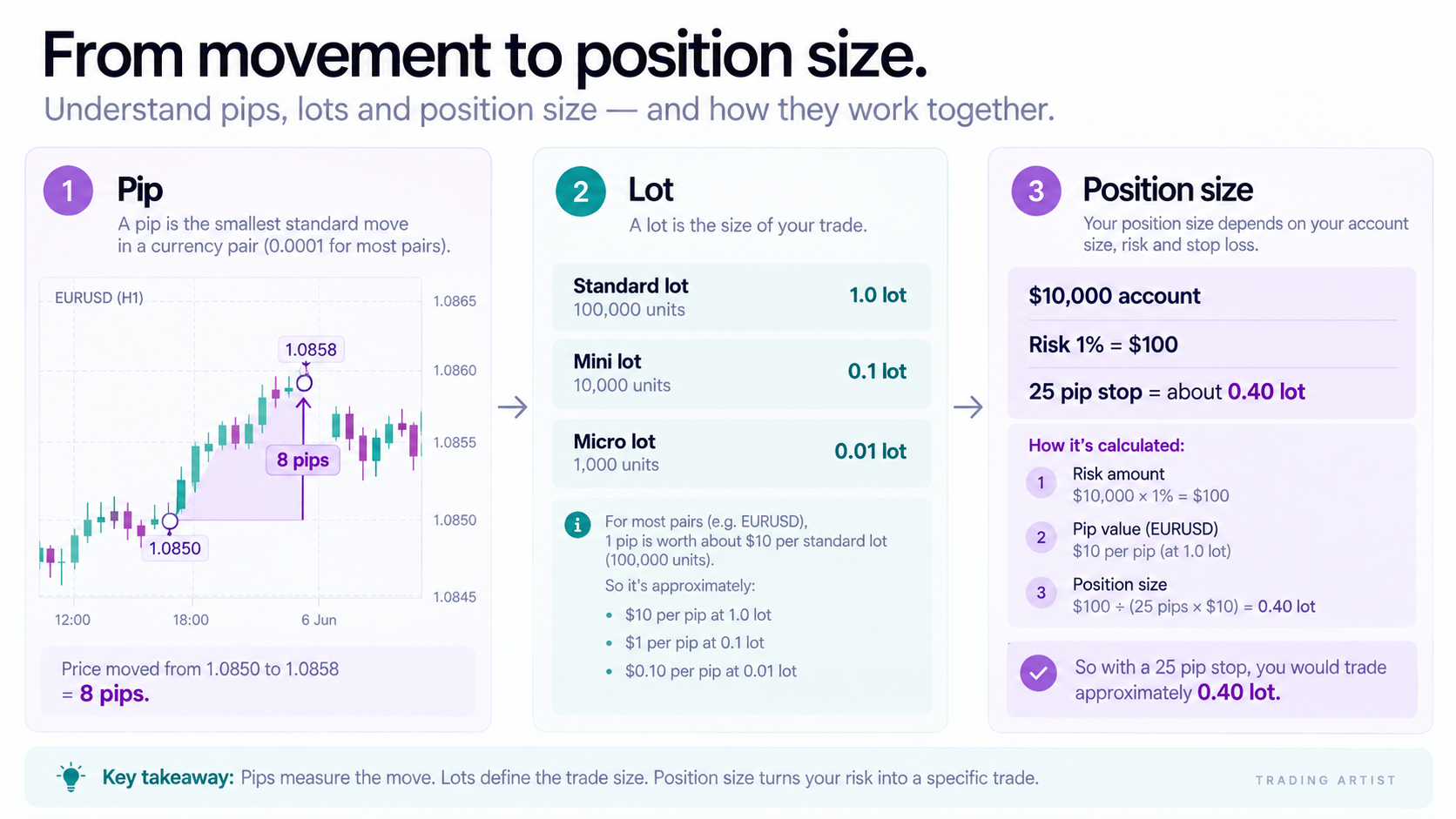
In one linePips measure movement. Lots measure trade size. Position size turns that movement into dollar risk.
What is a pip?
A pip is a standard way of describing a small Forex price movement.
Example
EUR/USD moves from 1.1000 to 1.1010.
That is a 10-pip move.
For most non-JPY pairs, one pip is the fourth decimal place. JPY pairs use a different decimal convention.
What is a lot?
A lot describes the size of a Forex position.
| Lot type | Units |
|---|---|
| Standard lot | 100,000 |
| Mini lot | 10,000 |
| Micro lot | 1,000 |
A larger lot size means each pip movement has a larger dollar effect.
How position size connects everything
Simple USD example
Account: $10,000
Planned risk: 1% = $100
Stop distance: 20 pips
$100 ÷ 20 pips = $5 per pip
On EUR/USD, a standard lot is approximately $10 per pip when USD is the quote currency. So $5 per pip is approximately 0.50 standard lot.
The exact value can change depending on the pair and account currency, which is why a calculator is useful.
Related toolPosition Size CalculatorCalculate position size →
Remember this
- Pip = movement.
- Lot = trade quantity.
- Position size should come from risk, not from available leverage.
Educational content.
This lesson is provided for general educational and informational purposes and is not personal financial or investment advice.