
In one lineCentral banks influence currencies by changing expectations about future interest rates and financial conditions.
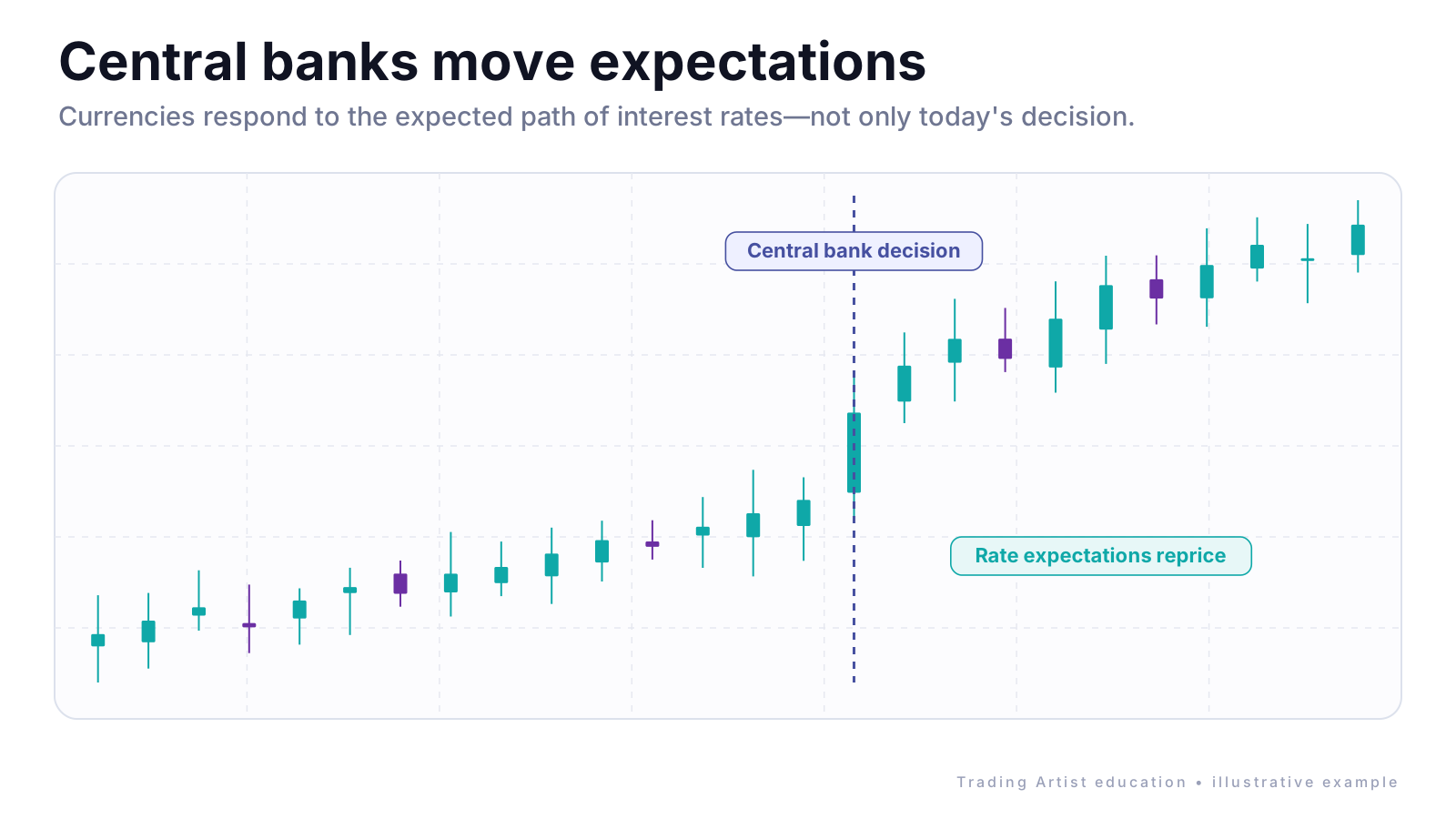
The market is always comparing
A higher interest rate is not automatically bullish for a currency. Traders compare one economy with another and focus on what may happen next.
Example
If the Federal Reserve is expected to keep rates higher while another central bank is expected to cut, USD may receive relative support.
Why speeches can move price
A central-bank statement can change expectations even when the current rate stays unchanged.
Broader risk sentiment can also influence currencies, especially during periods of market stress.
Remember this
- Expectations matter.
- Relative policy matters.
- Sentiment can temporarily dominate other drivers.
Educational content.
This lesson is provided for general educational and informational purposes and is not personal financial or investment advice.